WELCOME TO FAIRMONT INDUSTRIES
Language:


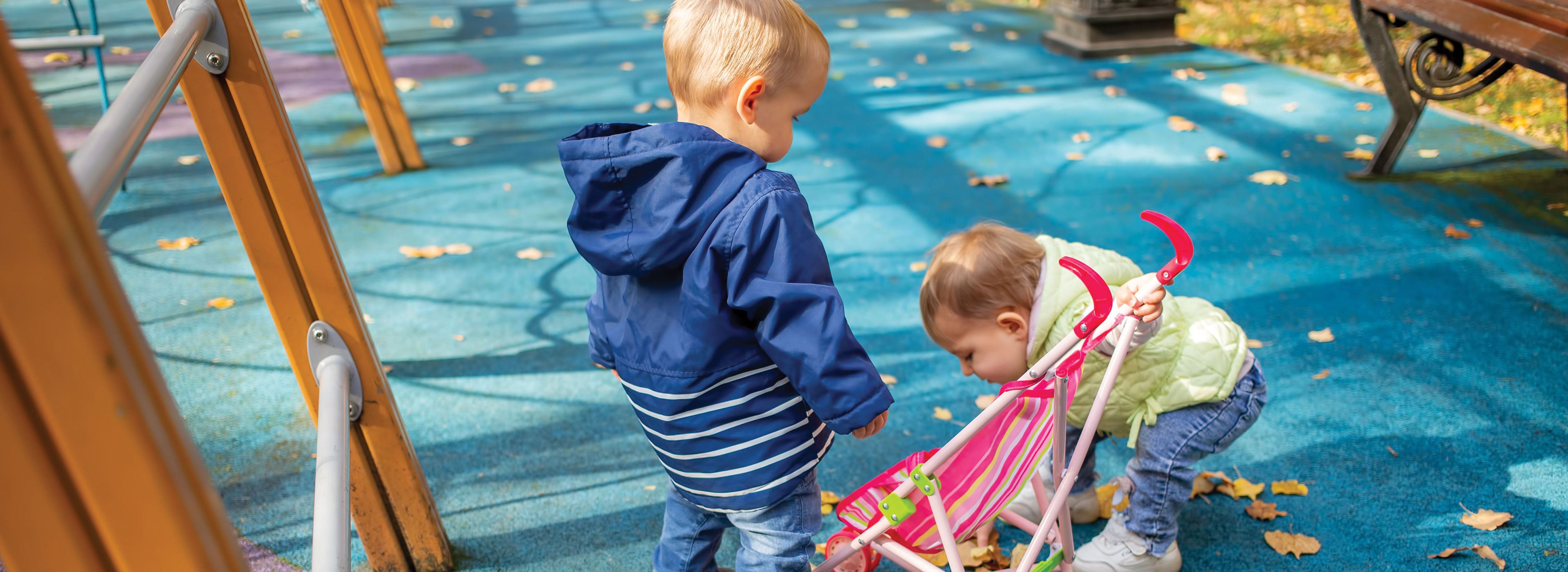
PU binders are polyurethane-based bonding systems used to bind rubber granules into strong, flexible and durable surfaces. They are an essential component of wet-pour rubber flooring, playground safety surfacing, sports tracks and other synthetic rubber surface systems.
At Fairmont Industries, we manufacture PU binder systems under our AIRETHANE range, specifically formulated to deliver reliable performance with our Ecolastic® EPDM granules. Our binders are also suitable for use with a wide range of other EPDM granules, providing contractors, flooring specialists and sports-surface professionals with a dependable solution for rubber surfacing applications.
Founded in 1998, Fairmont Industries has built more than two decades of experience in EPDM rubber granule manufacturing and synthetic safety surfacing. Following our acquisition by Sport Group in 2017, our manufacturing capacity increased from 4,000 to 12,000 tonnes per year, supported by expanded facilities, laboratories, European-standard equipment and a world-class manufacturing plant.
Whether you require a PU binder for EPDM granules, wet-pour rubber flooring, playground surfacing or sports track systems, we combine polyurethane binder technology with rubber-surfacing expertise to help you select the appropriate system for your application.
PU binders for rubber (polyurethane binders for rubber) are reactive adhesive systems designed to bind loose rubber particles such as:
Once cured, polyurethane binders for rubber form a strong, flexible matrix that locks rubber particles together, creating seamless, impact-absorbing surfaces.
These properties make PU binders for rubber essential in flooring systems and industrial rubber manufacturing.
A PU binder bonds individual rubber granules together to create a continuous surface.
For a typical wet-pour or poured-in-place rubber system, the process involves:
The correct binder-to-granule ratio, environmental conditions, mixing procedure and curing conditions are important to achieving consistent results. Therefore, contractors should always follow the relevant product Technical Data Sheet (TDS) and application instructions rather than relying on a generic mixing ratio.
For Fairmont systems, binder requirements can vary according to the surfacing system. For example, Fairmont publishes specific binder consumption and mixing information for its Ecolastic® PACE athletic track system.
A high-quality polyurethane binder is a critical component of a rubber surfacing system because it determines how effectively the rubber granules are bonded and how the finished surface performs.
PU binders provide the bonding mechanism that holds rubber granules together. Consistent adhesion helps the finished surface maintain its structural integrity under regular use.
Polyurethane binder systems can provide the flexibility required for rubber flooring and impact-absorbing surfaces. This is particularly important where the surface needs to accommodate movement and repeated loading.
When used in poured-in-place systems, PU binders allow rubber granules to be formed into seamless surfaces without the joints associated with conventional tile systems.
The binder contributes to the long-term integrity of the rubber surface by maintaining the bond between individual granules.
Binder selection should take into account the specific rubber granule, particle size, colour, application and surfacing system. Fairmont's AIRETHANE range is specifically formulated for compatibility with its Ecolastic® EPDM granules while also being suitable for a wider range of EPDM granules.
PU binders can be categorised according to their chemistry, curing mechanism and intended application. For rubber surfacing, understanding these differences is important when selecting a suitable system.
One-component, or 1K, polyurethane binders are supplied as a single component and cure through a moisture-related reaction.
These systems can be particularly convenient for on-site rubber surfacing because they do not require the separate preparation of a resin and hardener component.
Typical considerations include:
The actual application procedure should always follow the manufacturer's technical documentation.
Two-component, or 2K, polyurethane systems consist of separate components that react after mixing.
The principal advantage of a 2K system is that the curing reaction can be controlled through the formulation and specified mixing procedure.
These systems can be appropriate for specialised industrial applications where controlled processing and mechanical performance are important.
However, 1K and 2K PU binders should not be treated as interchangeable products. The correct system depends on the application, equipment, environmental conditions and required performance.
Aromatic polyurethane binders are commonly selected where cost efficiency and mechanical performance are important.
However, aromatic polyurethane chemistry can be more susceptible to colour change when exposed to prolonged UV radiation.
For applications where appearance and colour retention under outdoor sunlight are important, the suitability of the particular binder formulation should therefore be considered carefully.
Aliphatic polyurethane binders are generally selected where enhanced UV stability and colour retention are required.
This makes aliphatic systems particularly relevant to exposed outdoor rubber surfaces where long-term appearance is an important consideration.
| Consideration | Aromatic PU Binder | Aliphatic PU Binder |
|---|---|---|
| Cost | Generally more economical | Generally higher |
| UV exposure | More susceptible to colour change | Better UV stability |
| Colour retention | Application dependent | Generally better |
| Outdoor applications | Depends on formulation | Particularly suitable where colour stability is important |
| Typical consideration | Cost-effective applications | UV-exposed decorative surfaces |
The correct chemistry should always be selected according to the complete surfacing system rather than price alone.
PU binders are widely associated with rubber granule surfacing because they allow loose rubber particles to be converted into a continuous, resilient surface.
EPDM granules are widely used as the visible surface layer in playgrounds, recreational areas and sports surfacing systems because of their colour range, weather resistance and suitability for outdoor applications.
Fairmont's AIRETHANE binders are specifically formulated to work with Ecolastic® EPDM granules and can also be used with other EPDM granules.
SBR rubber granules are commonly used in impact-absorbing base layers for poured-in-place playground surfaces.
Fairmont describes typical playground systems using recycled SBR rubber as the base layer and EPDM granules as the upper surface layer, with polyurethane binder used to bind the rubber materials together.
Polyurethane binders can also be used to form surfaces from suitable recycled rubber granules.
The appropriate binder and application procedure depend on the characteristics of the recycled rubber, particle size, moisture content, intended surface and required performance.
One of the most important applications of PU binders is wet-pour rubber surfacing.
Wet-pour rubber flooring is produced by mixing rubber granules with a polyurethane binder and installing the mixture on site. The resulting surface is seamless, resilient and suitable for applications where impact absorption, durability and design flexibility are required.
Fairmont's published information identifies polyurethane binders and rubber granules as key components of poured-in-place playground flooring systems.
Typical applications include:
A wet-pour system may incorporate an SBR base layer for cushioning and an EPDM top layer for colour, durability and UV resistance, depending on the specified system.
PU binder systems are also important in athletic and sports flooring applications.
Fairmont supplies EPDM granules for athletic track systems and publishes technical information for its Ecolastic® PACE product, which is certified by World Athletics™ and designed for high-performance track installations.
Fairmont's sports-surfacing information also describes polyurethane, EPDM and SBR components used in running track systems.
Depending on the system, PU binder technology can contribute to:
The binder should always be selected as part of the complete track system rather than as an isolated material.
Choosing a PU binder involves more than simply comparing prices. Contractors, flooring specialists and procurement teams should consider the complete technical requirements of the application.
The binder must provide reliable adhesion to the selected rubber granules.
Flexible binder systems are important for surfaces that experience repeated impact and movement.
For outdoor applications, UV resistance and colour retention should be considered, particularly where coloured EPDM granules are used.
Temperature, humidity and moisture can affect polyurethane curing. The binder should therefore be appropriate for the expected installation conditions.
The binder must be compatible with the selected EPDM, SBR or recycled rubber material.
Contractors need sufficient working time to mix, place and finish the rubber mixture before the binder begins to cure.
The required surface thickness, texture, elasticity, colour and intended use can all influence binder selection.
The right PU binder depends on the application and the complete surfacing system.
Consider the following factors before placing an order.
Determine whether the binder will be used for:
Confirm whether you are using:
The binder should be compatible with the selected material.
For outdoor applications with significant sunlight exposure, consider a binder formulation appropriate for the required UV and colour-retention performance.
Temperature, humidity, substrate condition and moisture can affect the application and curing of PU binders.
Before purchasing, request the relevant:
For sports and playground applications, the binder should be evaluated together with the rubber granules, substrate, installation method and required performance.
Fairmont Industries is a Malaysian manufacturer with established expertise in EPDM granules and PU binder systems.
Founded in 1998, Fairmont describes itself as Asia's first EPDM granule manufacturer. Since the acquisition by Sport Group in 2017, the company has expanded its manufacturing capacity from 4,000 to 12,000 tonnes per year and operates with expanded laboratory, warehouse and manufacturing facilities.
This combination of EPDM granule manufacturing and PU binder expertise provides an important advantage for customers specifying complete rubber surfacing systems.
Rather than treating the binder and granules as completely separate products, Fairmont can apply its knowledge of both materials when supporting rubber surfacing requirements.
AIRETHANE is Fairmont's range of polyurethane binders.
Fairmont states that its AIRETHANE binders are proudly manufactured by Fairmont and specially formulated to deliver optimal performance with Ecolastic® EPDM granules. The range is also designed to work with a wide range of other EPDM granules.
The AIRETHANE range includes applications and solutions covering:
This makes AIRETHANE particularly relevant to contractors and specialists working with EPDM rubber surfacing systems.
Selecting a PU binder supplier is an important decision because binder performance directly affects the quality of the finished rubber surface.
Fairmont has been manufacturing EPDM granules since 1998 and has built its business around synthetic safety surfacing and rubber sports flooring.
Fairmont specifically identifies itself as a manufacturing expert in both EPDM granules and PU. This provides customers with access to expertise across two critical components of rubber surfacing systems.
AIRETHANE binders are manufactured by Fairmont and formulated for compatibility with Ecolastic® EPDM granules.
Fairmont states that it operates a robust R&D and quality-control laboratory and has European-standard laboratory equipment.
Fairmont's application engineering team provides technical advice relating to material and binder selection, installation standards and troubleshooting.
Fairmont states that it is one of the few EPDM manufacturers worldwide able to conduct Critical Fall Height testing in-house using the TRIAX TOUCH E-Missile system.
This capability is particularly relevant to playground safety surfacing projects where impact attenuation and fall-height performance are important considerations.
Following the 2017 Sport Group acquisition, Fairmont reports manufacturing capacity of up to 12,000 tonnes per year, supported by expanded facilities and production resources.
Selecting the right PU binder is only part of achieving a successful rubber flooring installation. Correct material selection, mixing, installation and curing are equally important.
Fairmont's application team provides technical support across areas including:
Fairmont describes its application engineers as supporting customers throughout the process from R&D and production through to sales and post-sales service.
For project-specific requirements, we recommend discussing the application with our technical team before selecting a binder grade.
PU binders are formulation-specific products. Therefore, technical properties such as viscosity, density, curing time, NCO content, working time and recommended binder consumption should be taken from the specific product's Technical Data Sheet, rather than relying on generic industry ranges.
For example, Fairmont publishes system-specific binder consumption information for Ecolastic® PACE, including different requirements for sandwich, spray-coat and full-PUR track systems.
When evaluating PU binders, procurement and technical teams should request information covering:
Technical values vary by product and application. Always refer to the applicable Fairmont TDS and SDS before use.
The cost of PU binders varies according to the product formulation and project requirements.
Factors that can affect pricing include:
Different polyurethane chemistries can have different raw material and performance characteristics.
Aliphatic systems may command a higher price where enhanced UV stability and colour retention are required.
A binder designed for a specialist sports or playground system may have different performance requirements from a general-purpose application.
Bulk requirements can influence the commercial price per unit.
Packaging requirements and delivery arrangements can also affect the overall procurement cost.
Custom performance requirements, application conditions and system specifications may affect the final product selection and price.
For an accurate quotation, provide the intended application, rubber type, estimated quantity, project location and required performance specifications.
Rubber surfacing projects in Malaysia and other tropical markets can be exposed to high temperatures, humidity, intense sunlight and frequent rainfall.
These conditions make correct material selection particularly important.
When specifying PU binders for outdoor Malaysian applications, consider:
The binder should be selected as part of a complete surfacing system, with installation carried out according to the manufacturer's technical requirements.
Fairmont's experience in EPDM safety surfacing and its technical support capabilities provide a useful foundation for projects operating under demanding outdoor conditions.
PU binders are particularly useful where flexibility and rubber-granule adhesion are required.
PU systems are generally better suited to flexible rubber surfacing applications, whereas epoxy systems are commonly associated with more rigid coatings and structural bonding.
PU binders provide a flexible bonding matrix for rubber granules, while cementitious systems are rigid mineral-based materials.
Polyurethane binder systems are specifically engineered for applications where rubber granules need to be bonded into a resilient surface.
The correct technology ultimately depends on the material, substrate, environmental exposure and required performance.
PU binders can be used across a range of rubber surfacing and sports applications.
PU binders are used with rubber granules to create poured-in-place playground surfaces designed for impact absorption and seamless installation.
Wet-pour systems combine rubber granules and polyurethane binder to create continuous recreational and safety surfaces.
Polyurethane-based systems are used together with EPDM and SBR components in athletic track construction. Fairmont supplies EPDM granules for sports track systems including its World Athletics™-certified Ecolastic® PACE solution.
PU binders can form part of rubber surfacing systems for sports facilities, recreational areas and other specialised flooring applications.
The flexibility and bonding characteristics of polyurethane make PU binders suitable for a variety of rubber-based safety surfacing systems.
Fairmont Industries supplies polyurethane binder solutions from its Malaysian manufacturing operation in Klang, Selangor.
Our experience spans EPDM granule manufacturing, polyurethane binder technology and synthetic safety surfacing. We work with customers requiring materials and technical support for playground, recreational and sports-surfacing applications.
Our Malaysian facility is located at:
Fairmont Industries
No. 2, Jalan Wawasan 3/KU7
Sungai Kapar Indah
42200 Klang, Selangor
Malaysia
The company provides technical and application support in addition to manufacturing and supply.
If you are exploring PU binders solutions for rubber flooring, playground surfaces, sports courts, or industrial applications, the FAQs below will help you understand how PU binders work, their benefits, and how to choose the right formulation for your project.

A PU binder is a polyurethane-based bonding material used to bind rubber granules into a continuous and durable surface. PU binders are commonly used in wet-pour playground flooring, sports surfacing, running tracks and other rubber-based applications.
PU binders are commonly used to bond EPDM, SBR and other compatible rubber granules. Applications include playground safety flooring, wet-pour surfaces, recreational areas and sports track systems.
The appropriate binder depends on the EPDM granule, application, installation method and required performance. Fairmont's AIRETHANE binders are specially formulated for compatibility with Ecolastic® EPDM granules and can also work with a wide range of other EPDM granules.
Aromatic PU binders are generally more economical but can be more susceptible to UV-related colour change. Aliphatic PU binders are generally preferred where enhanced UV stability and colour retention are required.
Using a PU binder offers several key benefits:
Strong bonding strength
High elasticity and flexibility
Excellent resistance to abrasion, water, and chemicals
Long-lasting performance even under heavy use
Suitable for both indoor and outdoor rubber surfaces
These properties make PU binders ideal for demanding environments.
Yes. PU binders are commonly used to bind SBR rubber granules in rubber surfacing systems. Fairmont's published playground information describes SBR rubber granules as a base-layer material in poured-in-place systems, combined with polyurethane binder.
Yes, PU binders are used in outdoor rubber surfacing. However, the formulation should be selected according to UV exposure, temperature, humidity and other environmental conditions. Where colour retention is important, an appropriate UV-stable system should be considered.
Curing time varies according to the binder formulation and environmental conditions. Temperature, humidity, moisture, application thickness and substrate conditions can all affect curing. Always follow the product-specific TDS rather than relying on a generic curing time.
Application depends on the specific binder and surfacing system. A typical process involves preparing the substrate, measuring the rubber and binder, mixing according to the specified procedure, placing the mixture, compacting or trowelling the surface and allowing it to cure.
There is no single universal binder-to-EPDM ratio. Consumption depends on the granule size, system type, application method and product specification. Fairmont publishes system-specific mixing information for its Ecolastic® PACE track system, demonstrating why the correct ratio should be taken from the applicable system documentation.
Yes. Fairmont states that its AIRETHANE PU binders are manufactured by Fairmont Industries. The company operates its manufacturing facility in Klang, Selangor, Malaysia.
Yes. Fairmont's application engineering team provides technical advice relating to material and binder selection, installation standards and troubleshooting.
Yes. Product-specific technical information should be requested for the relevant binder and application. Fairmont also provides SDS documentation for its products where applicable.
Consider the supplier's manufacturing capability, product consistency, technical expertise, material compatibility, quality-control procedures, application support and ability to provide appropriate technical documentation.
For rubber surfacing applications, it is particularly advantageous to work with a supplier that understands both the rubber granules and polyurethane binder system, rather than evaluating the binder in isolation.
Choosing the right PU binder can have a significant effect on the performance, appearance and durability of a rubber surfacing system.
At Fairmont Industries, we combine polyurethane binder manufacturing with more than two decades of EPDM granule and synthetic safety surfacing expertise. Our AIRETHANE binder range is manufactured by Fairmont and formulated with compatibility with Ecolastic® EPDM granules in mind.
Our technical team can assist with:
Contact Fairmont Industries for PU binder specifications, technical documentation and project-specific assistance.
For contractors, sports-surfacing specialists, playground developers and rubber flooring professionals looking for a PU binder manufacturer or supplier in Malaysia, Fairmont Industries provides both the polyurethane binder technology and rubber-surfacing expertise required to develop reliable surface systems.